







As cyberattacks get more advanced and targeted, regular vulnerability checks and even standard penetration tests often aren't enough to see how well a company can stand up to real attackers. While those methods are useful, they usually focus on a wide range of known issues instead of specific, immediate threats. This gap has led to Threat-Led Penetration Testing, a cutting-edge security test that simulates the actions of specific attackers that would target a company. By copying what real attackers do, this testing gives a great view of how well a company can actually defend itself against the threats that matter most.


What Is Threat-Led Penetration Testing?

Threat-Led Penetration Testing, also called intelligence-led penetration testing or red teaming, is a special kind of cybersecurity test. It focuses on copying the actions of a specific, real-world attacker or group. Unlike regular penetration testing, which tries to find as many weak spots as possible, Threat-Led PT is very focused. Its main goal is to test a company's whole security setup – its people, how it works, and its technology – against the ways that a relevant attacker is known to act.
This method is powered by current threat information. Before any testing starts, information is gathered on the specific attackers who are most likely to target the company. This includes why they attack, what they usually target, how they attack, what tools they use, and how they avoid being caught. The penetration test is then carefully planned to copy these specific attack steps. This lets the company see how well it can spot, stop, respond to, and recover from a real cyberattack.
In the end, Threat-Led Penetration Testing gives a very realistic and helpful view of how well a company can stand up to the threats it's most likely to face. It helps find holes in defenses, tests how well incident plans work under pressure, and checks if current security measures are working against advanced attackers. By focusing on what if a certain attacker targets us, it gives a better understanding and preparation than basic vulnerability scans or regular pentesting.
Key Aspects of Threat-Led Penetration Testing
There are some key of Threat-Led Penetration Testing. First, it uses helpful threat intelligence. The assessment is based on specific, relevant, and current threat information about attackers who might target the company. This includes why they attack, common targets, how they prefer to attack, what tools they use, and how they act. The quality of this information makes the whole assessment more useful and accurate.
Second, the assessment tests all defenses, not just technical ones. This kind of testing checks a company's people (like security awareness), processes (like incident procedures), and technology (like firewalls). The goal is to find weak spots across all defenses, including spotting, stopping, containing, and responding to attacks. This gives a complete view of how well a company can withstand a determined attacker.
Finally, teamwork is important. The red team (attackers) works secretly to copy a real attacker, and the blue team (defenders) usually doesn't know when or what the test is about. However, a white team helps the red and blue teams communicate, making sure safety rules are followed and sharing important information after the test. The main point is for everyone to learn together, using the results to improve security and get ready for threats.
Why Is Threat-Led Penetration Testing Important?
Threat-Led Penetration Testing is more important because of how cyber threats are changing and how limited regular security tests are. Attackers are always changing their ways, so basic security checks often don't show a company's real weak spots. This testing gives a realistic view of defenses. It answers the question: Can we stop an attack from this kind of attacker, using their methods? This helps make sure security efforts are focused on the most likely and damaging threats.
It's also important for checking how well a company's whole security plan works, including its people and processes. Security tools might be set up right, but this testing can show weak spots in spotting attacks, responding to incidents, or working together. By testing these things under pressure, companies can find problems, improve how they respond, and get ready for attacks.
This testing gives leaders a clear view of the risks that remain. It shows how attackers can use weak spots. This helps them make good decisions about security, risks, and resources. By testing against the most dangerous threats, companies can be more confident in their security, meet rules for advanced testing, and lower the chance of a successful attack.
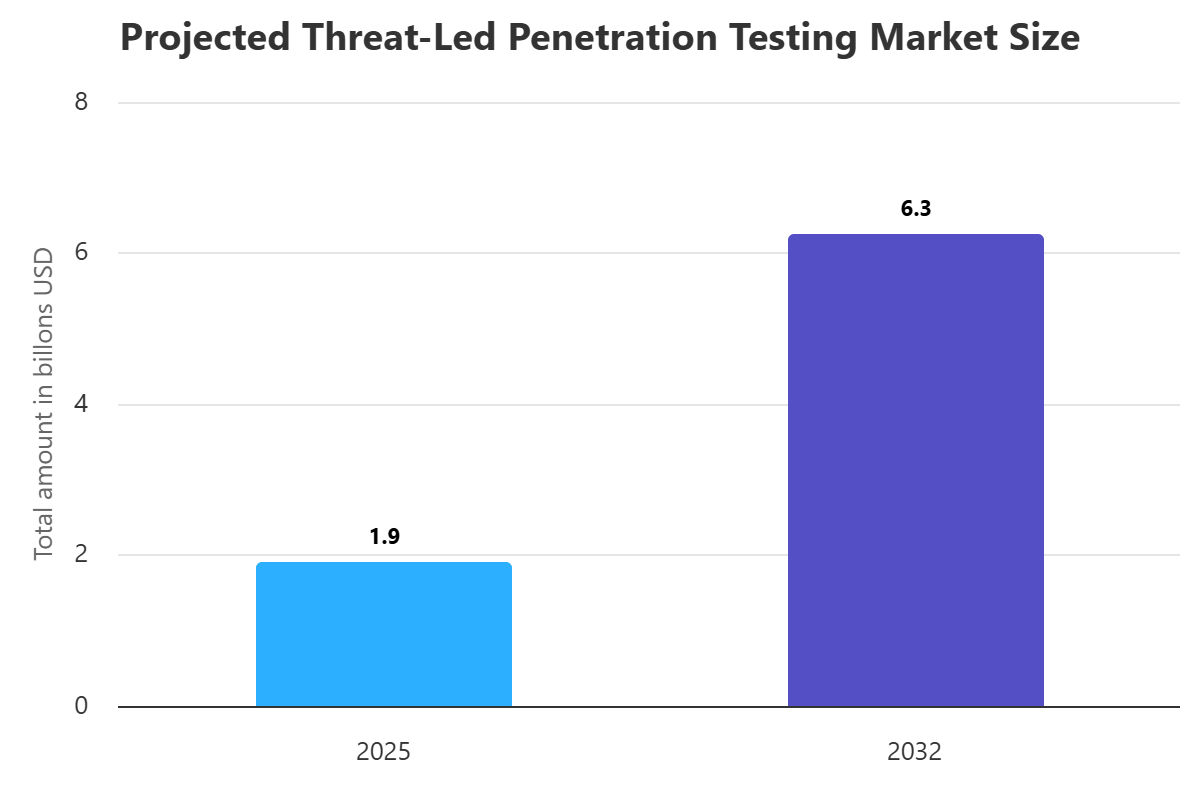
How Does Threat-Led Penetration Testing Work?
Threat-Led Penetration Testing usually has several steps. The process starts with gathering information and planning the attack. This step involves collecting threat information on specific attackers and how they act. Based on this information, a specific attack is planned, copying the attacker's behavior, tools, and attack methods.
Next, the attack starts. The red team tries to avoid being detected by the company's blue team. They use the methods that were identified, like phishing, exploits, and ways to move around the system. The goal is to reach the attack goals while going undetected.
Finally, there is a review and planning phase. The red team shares their methods, and the blue team shares their detection logs. A report is created, listing weak spots and gaps in detection. Recommendations are given on how to defend against the specific attacks, improve security tools, and get ready for incidents.
Types of Threat-Led Penetration Testing
While Threat-Led Penetration Testing focuses on copying specific attackers, there are different kinds based on how detailed and broad it is.
One kind is Adversary Emulation, which copies an identified attacker. The goal is to see if the company can spot and respond to that attacker. This is often a blind test, with the blue team not knowing it's happening.
Another kind is Red Teaming, which is broader but still based on threat information. Red teaming simulates a complex attack on a company's security with specific goals, like stealing data. It might use general threat information and common methods, but it doesn't always copy one specific attacker. This often includes social engineering and cyberattacks to reach its goals.
Also Targeted Engagements. These are based on a specific, high-risk situation, like an attack on a part of the business. The methods might come from threat information, but the main goal is to test a specific risk.
Components of Threat-Led Penetration Testing
Threat-Led Penetration Testing needs a few things to work well.
First, it needs helpful Threat Intelligence (CTI). This includes information on specific attackers, their goals, targets, and how they attack.
Second, it needs a skilled Red Team. These aren't just regular testers; they're specialists in offensive security. They need to be creative and use stealth to copy attackers.
Finally, it needs good Communication, helped by a White Team. The White Team helps the Red Team and the Blue Team (defenders) communicate. The review includes information on the attack and how the blue team detected it. This helps find gaps and improve defenses.
Benefits of Threat-Led Penetration Testing
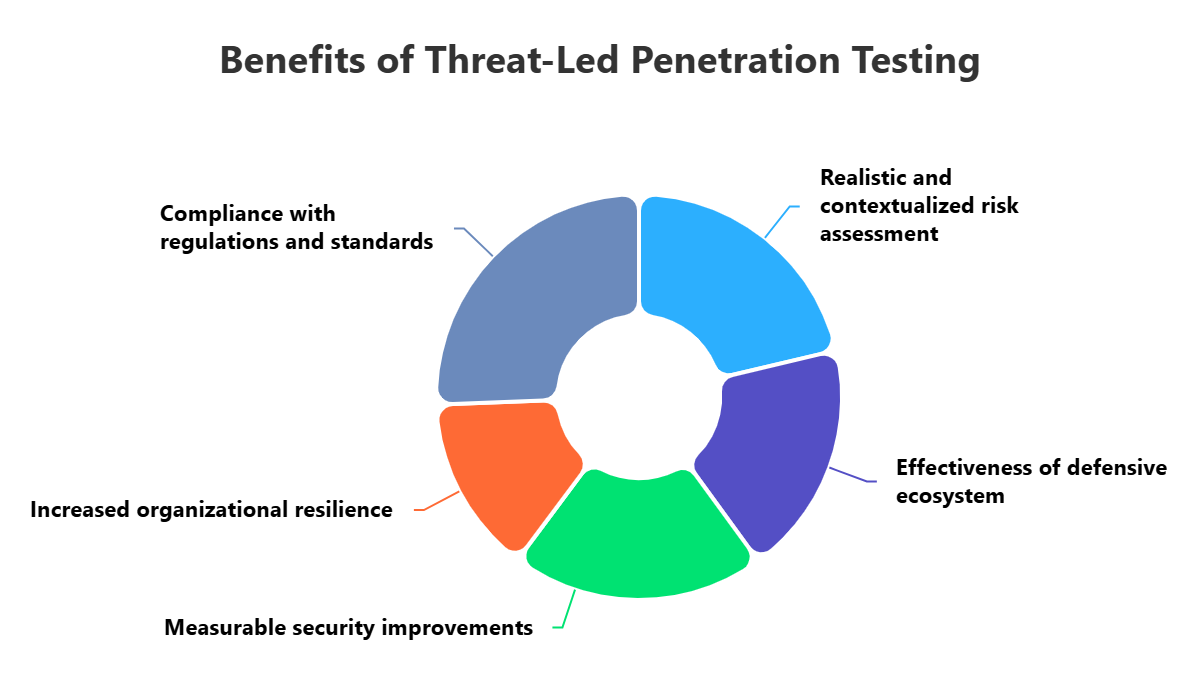
The upsides of Threat-Led Penetration Testing are big, giving better security than regular tests. One is a realistic risk assessment. By copying how attackers it gives a clear idea of the real highest risk.
Also, it checks all defenses, including people, and technology. It tests the Security Operations Center (SOC) and the Incident Response (IR) team. This helps find gaps and improve security.
By finding these gaps, this testing leads to security improvements. The reviews help improve security, threat detection, and incident plans. This helps be ready attacks.
Challenges of Threat-Led Penetration Testing
Even with its good sides, Threat-Led Penetration Testing has problems that companies need to think about. One is the high cost. It needs skilled teams and special tools. This makes it more expensive than regular tests.
Threat-Led Penetration Testing relies on helpful threat information. If the information is bad, the test might not reflect real threats.
Finally, it can be hard to manage and can disrupt things. Even though red teams work secretly, there's a small chance of impact on systems. Careful planning is needed to lower these risks.
Best Practices for Threat-Led Penetration Testing
To get the best from Threat-Led Penetration Testing, companies should follow some practices. First, put money into high-quality threat information. Work with threat information teams to find the main high-risk. This information should be current.
Second, set goals and rules. Define what the red team is trying to do and what they can't do (make sure clear rules are set).
Finally, focus on reviews and learning. The real benefit is in what's learned. Review what happened and find gaps. Create a plan to improve things, update response plans, and train staff. This helps be ready for threats.
How ImmuniWeb Can Help with Threat-Led Penetration Testing?
ImmuniWeb provides a compelling and integrated approach that significantly enhances an organization's capabilities in Threat-Led Penetration Testing, particularly through its unique blend of AI-driven intelligence and expert human oversight. Their AI-powered External Attack Surface Management (EASM) and Dark Web monitoring serve as a crucial foundation for Threat-Led PT. By continuously discovering and monitoring an organization's internet-facing assets and identifying exposures on the dark web, ImmuniWeb provides critical, real-time threat intelligence. This intelligence can highlight which specific assets are most vulnerable and which digital footprints might be leveraged by threat actors, thereby informing the selection of target systems and initial attack vectors for a Threat-Led PT scenario.
Furthermore, ImmuniWeb's expertise in actionable cyber threat intelligence can directly support the planning phase of Threat-Led PT. Their platform and analysts can provide insights into emerging TTPs, actor profiles, and specific attack campaigns relevant to a client's industry or technological stack. This intelligence helps in designing more realistic and effective attack simulations, ensuring that the "threat" aspect of the Threat-Led PT is genuinely aligned with the most pertinent risks facing the organization.
While ImmuniWeb primarily offers sophisticated hybrid penetration testing (combining AI automation with human ethical hackers), their methodology and platform capabilities are highly adaptable to supporting intelligence-led red team exercises. Their ability to deliver detailed, actionable findings and facilitate continuous security improvement is paramount. Post-engagement, ImmuniWeb's comprehensive reports provide forensic-level details on attack paths, vulnerabilities exploited, and critical gaps in detection and response, enabling organizations to precisely tune their defenses against the specific TTPs tested. This positions ImmuniWeb as a valuable partner in enhancing an organization's overall resilience and preparedness for highly targeted cyberattacks.
Disclaimer
The above-mentioned text does not constitute legal or investment advice and is provided “as is” without any warranty of any kind. We recommend talking to ImmuniWeb experts to get a better understanding of the subject matter.


















 API Penetration
 API Security
 Application Penetration
 Application Security
 Attack Surface
 Automated Penetration
 Cloud Penetration
 Cloud Security
 Continuous Automated
 Continuous Breach and
 Continuous Penetration
 Continuous Threat
 Cyber Threat
 Data Security Posture
 Dark Web
 Mobile Penetration
 Mobile Security
 Network Security
 Penetration
 Phishing Websites
 Third-Party Risk
 Threat-Led
 Web Penetration
 Web Security