







The usual way of handling cybersecurity, with occasional scans for problems and reacting when something happens, isn't cutting it anymore in today's fast-changing threat environment. As groups use more digital tools across different cloud setups, they need a more forward-thinking and all-encompassing strategy. This switch has brought about Continuous Threat Exposure Management (CTEM), a plan to constantly find, check, sort, and fix security weaknesses before they're used against you.


What Is Continuous Threat Exposure Management (CTEM)?

Continuous Threat Exposure Management (CTEM) is a regular cybersecurity plan that gives groups a current, threat-aware, and business-focused view of their security situation. Unlike old ways that just look for tech problems, CTEM looks at everything, thinking about all possible weak spots on a group's attack surface. These weak spots can be things like wrong settings, outdated systems, identity and access management (IAM) problems, exposed info, and even employee weaknesses like falling for phishing.
The main idea behind CTEM is to make security proactive by creating a system that works again and again. This system always goes through steps of figuring out what to check, finding problems, ranking them, checking them, and fixing them. It doesn't depend on old lists or occasional checks, but on up-to-date info and constant actions to make sure a group always knows its biggest security problems and how they connect to real threats.
By using CTEM, groups switch from waiting for bad things to happen to constantly trying to stop them. It lets security teams put their energy into weak spots that are the biggest danger to their business, helping them make better choices about where to spend money and lowering the chance of successful cyberattacks.
Key Aspects of Continuous Threat Exposure Management
One of the most important things about CTEM is that it's constant and can change. Unlike normal security habits that just give you a snapshot in time, CTEM is meant to work all the time, changing as the tech setup and threat landscape change. This means always watching for new items, changes in settings, and new weaknesses or attack methods. This always-on way makes sure security teams always see their weak spots and can quickly react to new dangers.
Another key thing is ranking weak spots based on what's important to the business. CTEM doesn't just give a weakness a score. It looks at how important the affected item is, how likely attackers are to use it, and what could happen to the business if an attack works. This lets groups fix the weak spots that really matter to their work and goals, spending money wisely and lowering danger as much as possible.
CTEM also stresses checking if things can be exploited and if security is working. It doesn't just find possible weaknesses; it often tries to simulate attacks or uses breach and attack simulations (BAS) to confirm if a weakness can really be used in that setup and if current security can spot or stop the attack. This check gives real proof of security gaps, letting security teams fine-tune their tools and actions to work best against real threats, making sure security spending is really worth it.
Why Is Continuous Threat Exposure Management Important?
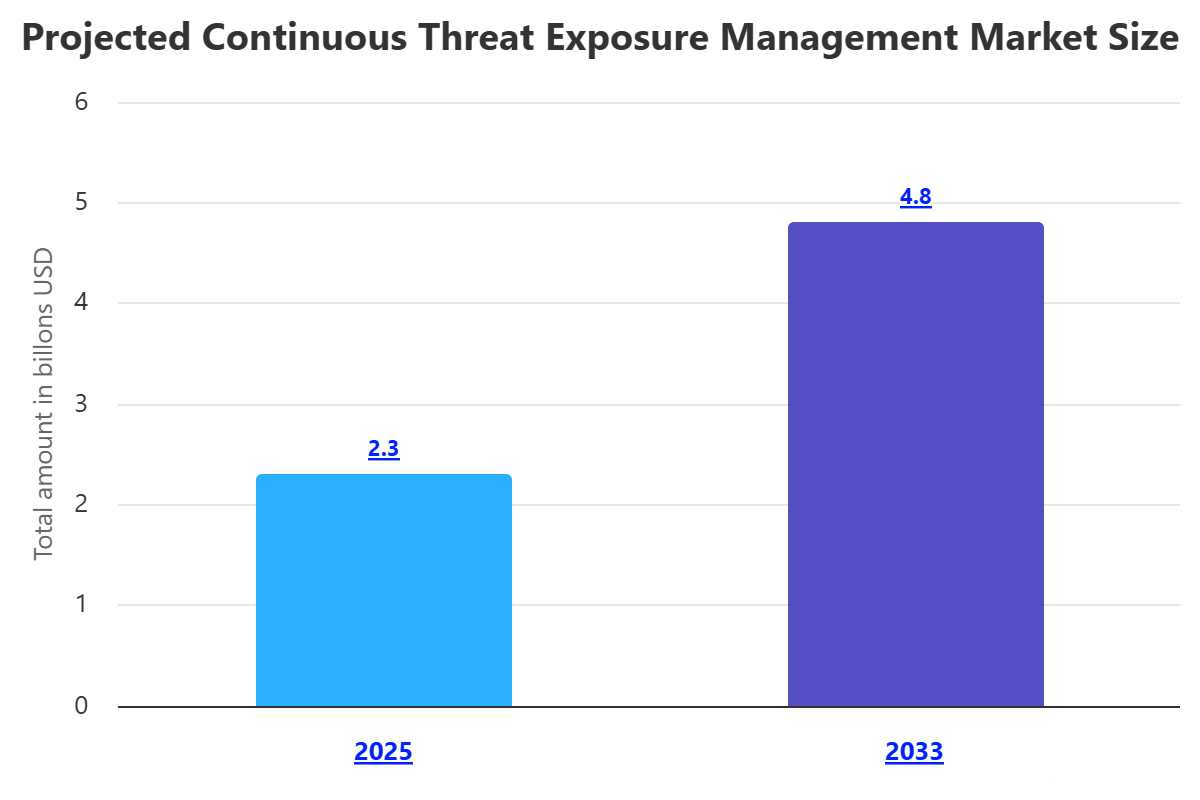
Continuous Threat Exposure Management is very important because the old ways of reacting to problems aren't good enough to fight today's cyber threats. Groups now have complicated tech setups spread across their own systems, cloud services, SaaS apps, and many IoT devices. This growing and changing attack surface makes it impossible for simple security checks to give a full and current view of a group's danger. CTEM fills this gap by giving constant, real-time views.
Also, cyberattacks are costing more and hurting reputations, making it important to lower danger. Regulators are putting in place stricter data protection and cybersecurity rules, with big punishments for not following them. CTEM lets groups switch from fixing problems after they happen to stopping them before they happen. By always finding and checking the most important weak spots, CTEM helps groups fix problems before they're used against them, lowering the chance of expensive attacks, fines, and harm to their brand.
CTEM is also key for making the most of security spending and improving overall cyber defense. Many groups spend a lot on security tools but don't have proof they work. CTEM gives this check by testing if security can stand up to real attack methods. This not only helps show the value of security but also finds where tools are set up wrong or not working well. By creating a constant feedback loop and matching security actions with business goals, CTEM helps groups build a better security system that can handle changing threats.
How Does Continuous Threat Exposure Management Work?
Continuous Threat Exposure Management works as a repeating and connected program, with five steps that are done all the time. It starts with Scoping, where a group sets its important items, business goals, and the attack surface areas to check. This step makes sure CTEM actions match business goals and focus on what's most important, finding all relevant IT items across different setups, including hidden IT and quick cloud resources.
After scoping, the Discovery phase always maps the group's entire attack surface. This is done with automated tools, including external attack surface management (EASM) solutions, vulnerability scanners, cloud security posture management (CSPM) tools, and identity and access management (IAM) scanners. The goal is to list all items, find open ports, spot wrong settings, list identities, and find software parts that could be used to get in or expose sensitive info. This is an ongoing process that changes with the environment.
Then comes Prioritization, where found weak spots are studied and ranked based on how they could affect the business and how likely attackers are to use them. This goes beyond scores, adding threat info, item importance, and background info to find real danger. The Validation stage then checks if ranked weak spots can really be used and if current security (like EDR, SIEM, firewalls) would spot or stop a simulated attack. This often uses breach and attack simulation (BAS) or automated red teaming. Finally, the Mobilization phase focuses on fixing problems, making sure security gaps are handled well. This assumes: fixing tasks to the right teams (like IT, DevOps), tracks progress, and always re-tests to confirm the weak spot has been fixed, closing the loop and driving constant security improvement.
Types of Continuous Threat Exposure Management
While CTEM is a full program, its use can involve different types of constant security checks, each focusing on different parts of the attack surface. One main type of CTEM is External Attack Surface Management (EASM) CTEM. This focuses on a group's internet-facing items, always watching for exposed services, wrong domain settings, forgotten apps, stolen info on the dark web, and other weaknesses an outside attacker could use. It often uses ways to find and check the perimeter from an attacker's view.
Another key type of CTEM is Internal Attack Path Analysis and Validation. This goes past the perimeter to always check a group's internal networks, endpoints, and cloud setup for ways to move around and gain more power. It uses tools that act like insider threats or post-attack situations, checking if internal security (like network areas, EDR, IAM policies) is good at spotting and stopping an attacker from moving deeper into the environment and reaching important items. This type often works with Breach and Attack Simulation (BAS) tools.
Cloud and Identity Exposure Management within CTEM is also becoming very important. With more cloud use and complicated settings, this type of CTEM focuses on always finding and fixing cloud setting problems (like S3 bucket exposures, too much IAM power, unsafe serverless functions), weaknesses in cloud services, and too many user rights. It works with cloud security posture management (CSPM) and cloud infrastructure entitlement management (CIEM) solutions to give a full view of cloud-specific threats and identity-related weak spots across cloud uses.
Components of Continuous Threat Exposure Management
A good Continuous Threat Exposure Management program is built on connected tech and process parts. A key part is the Unified Attack Surface Discovery and Inventory Platform. This system always scans, collects, and matches data from different places (like internal network scans, cloud provider APIs, outside tools, EASM solutions) to make a current list of all digital items across the entire IT area. This includes devices, virtual machines, apps, cloud instances, network settings, identities, and even hidden IT. Without this full and changing list, good exposure management is impossible.
Another key part is the Threat Intelligence and Risk Prioritization Engine. This part takes in threat info from different places (like CISA advice, dark web watching, weakness databases, industry feeds) and matches it with the found items and their weaknesses. It uses analysis, often using AI and machine learning, to give background, check how likely attacks are, and find possible business effects. This lets the platform rank weak spots based on real danger, going beyond scores to focus on the most dangerous attack routes and weak items.
The Validation, Reporting, and Orchestrated Remediation Workflow forms the action part of CTEM. This part includes things like Breach and Attack Simulation (BAS) or automated red teaming to check if found weak spots can be used and if current security would spot or stop an attack. It then gives clear reports and dashboards, showing successful attack routes and security gaps. Importantly, it works with security automation platforms, ticketing systems, and development tools to automate and help fix found weak spots, making a system for always improving security.
Benefits of Continuous Threat Exposure Management
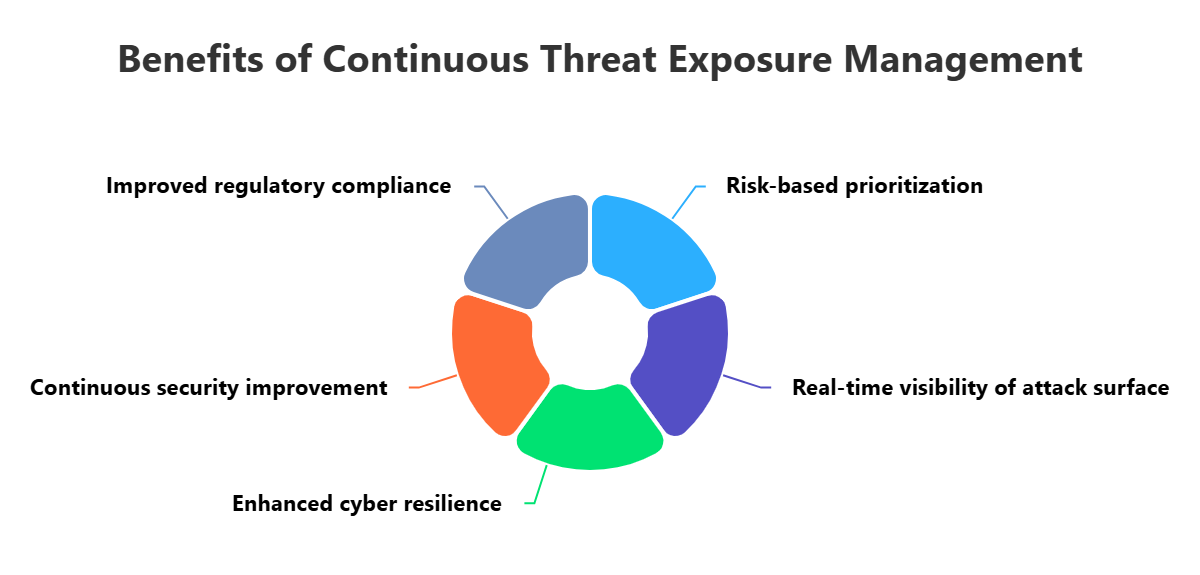
Using Continuous Threat Exposure Management gives benefits that strongly improve a group's cybersecurity and defense. First, CTEM gives a real-time view of the group's security and attack surface. By always finding and checking all digital items across different cloud setups, CTEM removes blind spots and makes sure security teams always know their danger. This awareness is key for defense.
CTEM enables risk-based ranking that matches security actions with business goals, leading to good spending. Instead of reacting to every warning, CTEM gives background to threats by thinking about item importance, exploitability, and possible business effects. This lets security teams focus energy on fixing weak spots that are the biggest danger to the group's important items and actions. This approach not only improves security but also makes security spending worth it.
CTEM creates a culture of security improvement and improves cyber defense. By checking if security is working against real attack methods and giving fixing advice, CTEM creates feedback. This lets security teams fine-tune their detection, improve response plans, and fix weaknesses before they're used. This cycle of finding, ranking, checking, and fixing leads to a better security system that can handle threats.
Challenges of Continuous Threat Exposure Management
Despite its benefits, using and keeping a Continuous Threat Exposure Management program can bring challenges for groups. One challenge is the complexity of IT areas. Groups often work across their own setups, clouds, and SaaS apps, with items and settings always changing. Finding and checking this area requires tools and work, which can be hard to handle.
Another challenge is dealing with a lot of data and warnings. CTEM platforms collect info on weaknesses, wrong settings, and attack results. Ranking these warnings based on danger—removing noise—is important but hard. Without tuning, security teams can get too many warnings, leading to fatigue where problems are missed, hurting the point of exposure management.
Resource limits, skill gaps, and teamwork bring challenges. CTEM needs spending on platforms and pros with skills in threat info, security, risk, and cloud security. Also, CTEM needs teamwork between security, IT, development, and leaders to make sure warnings are understood, ranked, and fixed across the group. Filling these gaps and making a unified security culture can be tough.
Best Practices for Continuous Threat Exposure Management
To improve a Continuous Threat Exposure Management program, groups should follow practices. First, start with scoping that matches business goals and always check your attack surface. Set your key items, processes, and rules. Make sure your CTEM platform always finds and maps all items, including cloud resources, to keep a view of your changing attack surface. This makes sure CTEM actions focus on what's important.
Then, use ranking based on threat info and background. Go beyond weakness scores by adding current threat info and background about item importance. Use CTEM to check how likely attacks are and the business effects of each weak spot. This lets your teams focus on the most important dangers to your group, improving how and what resources are spent.
Encourage teamwork, check security, and help fixing actions. CTEM needs to break down walls between teams. Add CTEM warnings to response and development tools. Use CTEM to test if weak spots can be used and if security is working. Set who owns fixing and re-testing to make a system where weak spots are fixed, improving the security system.
How ImmuniWeb Can Help with Continuous Threat Exposure Management?
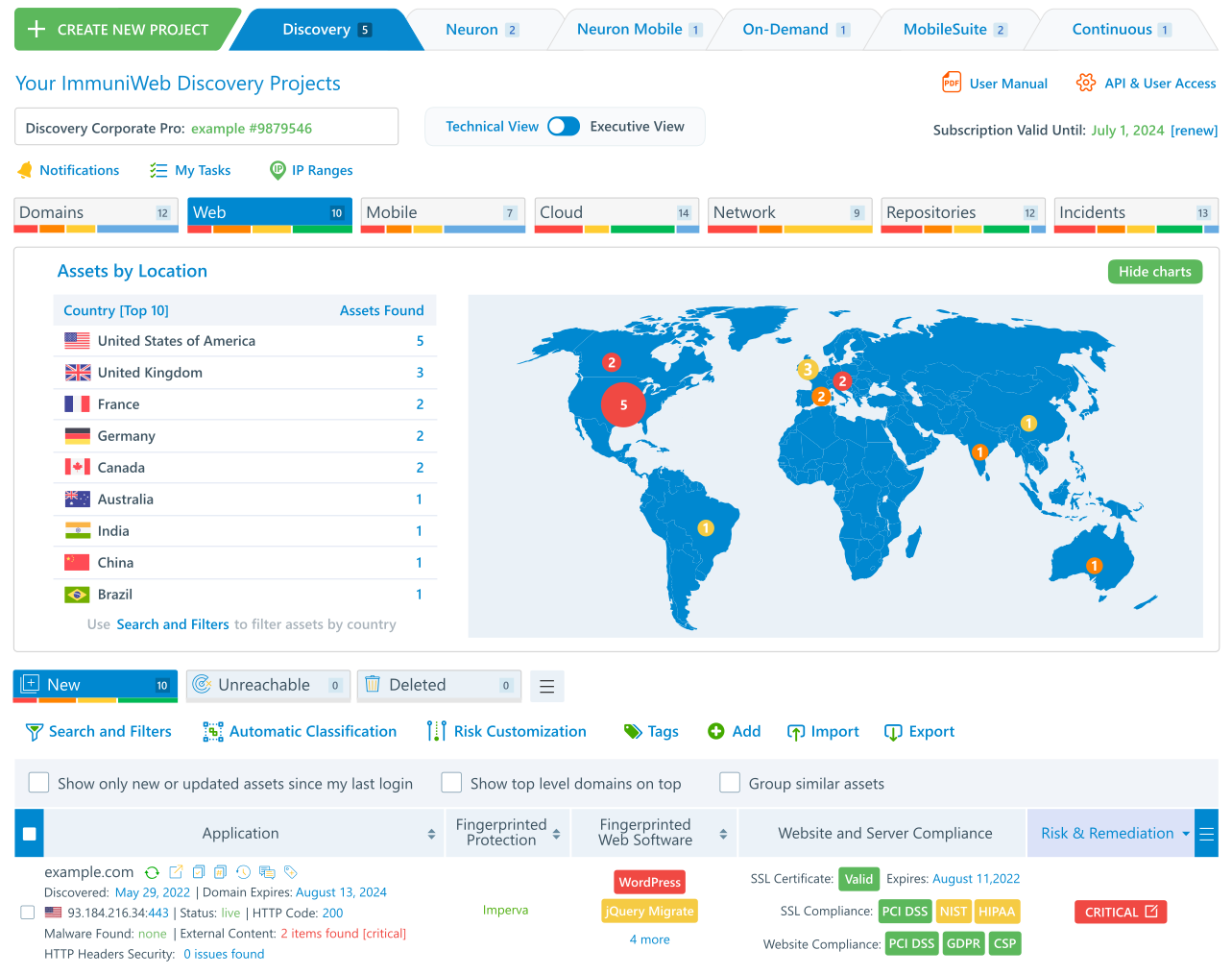
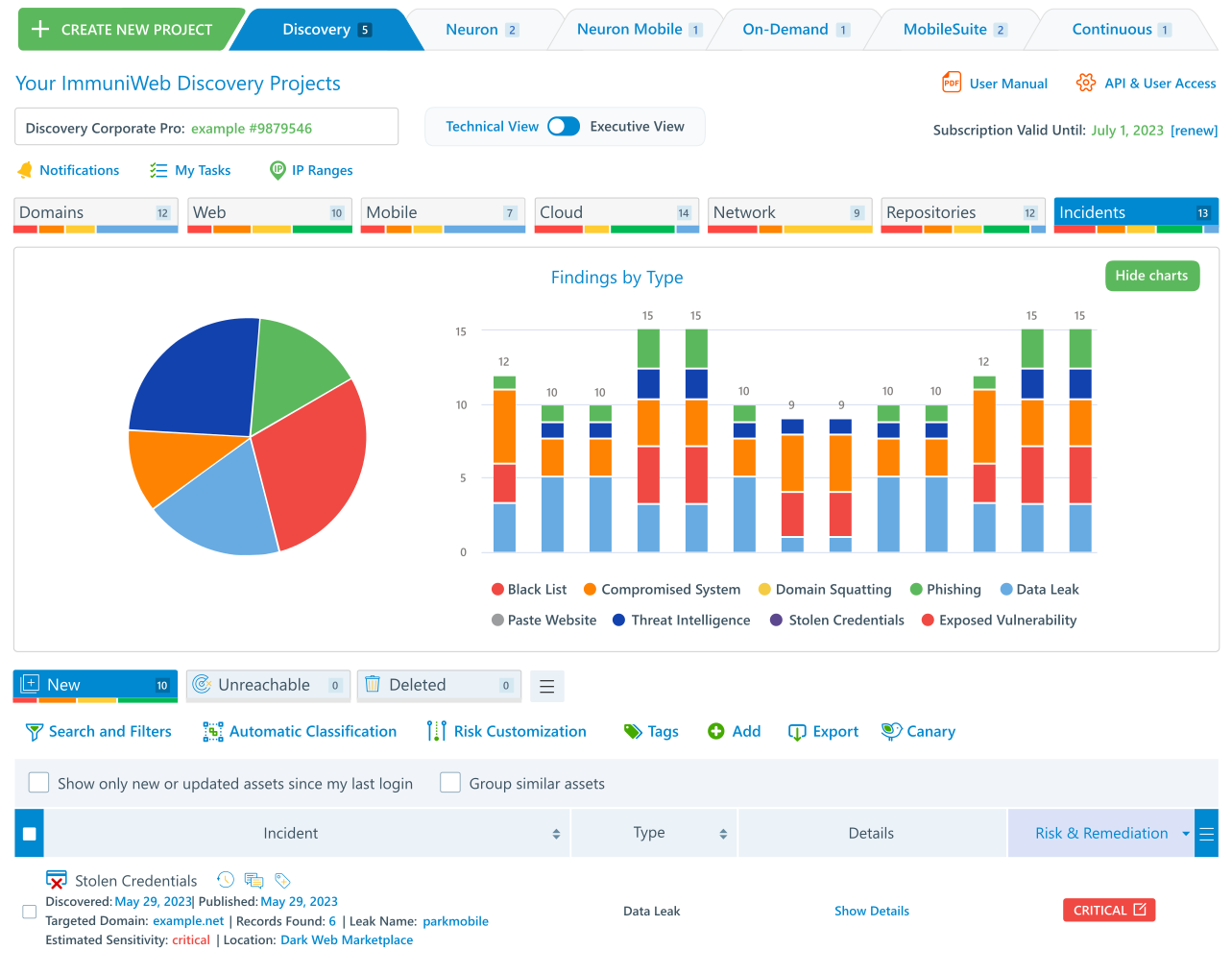
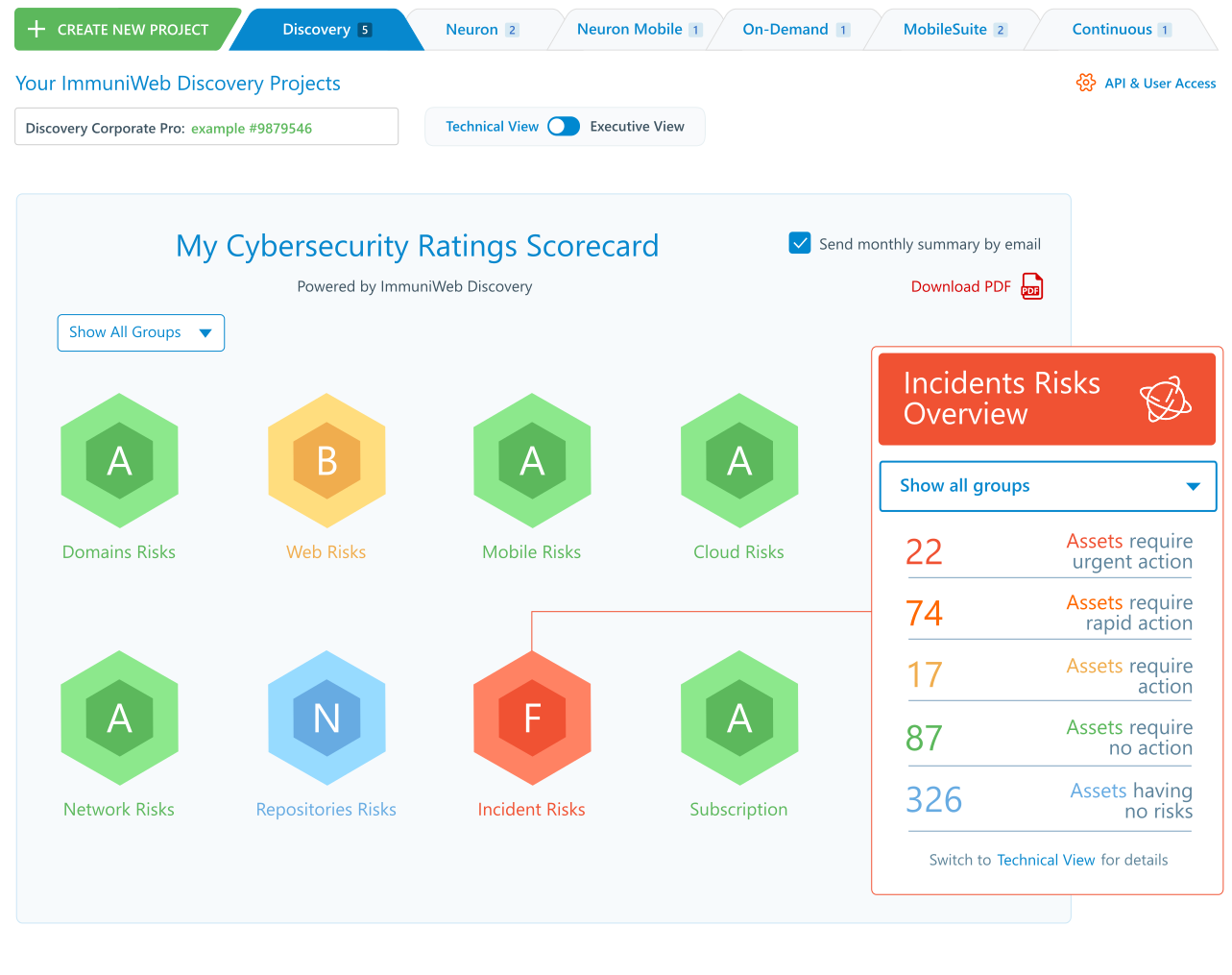
ImmuniWeb is exceptionally positioned to empower organizations in implementing and maturing their Continuous Threat Exposure Management (CTEM) strategies, offering a unique blend of AI-driven automation and human expertise across critical CTEM stages. ImmuniWeb's solutions significantly enhance the Discovery and Scoping phases by providing continuous, intelligent external attack surface management (EASM). ImmuniWeb Discovery continuously scans the public internet and dark web for your organization's digital footprint, identifying known and unknown assets (including shadow IT), exposed services, misconfigurations, and even leaked credentials related to your brand. This crucial, real-time visibility ensures your CTEM program always has a comprehensive and up-to-date view of your attack surface.
Furthermore, ImmuniWeb's core strength, its AI-driven, human-verified security testing, directly supports the Prioritization and Validation stages of CTEM. While automated tools accelerate initial discovery, ImmuniWeb's award-winning web application, API, and mobile security testing rigorously identifies sophisticated vulnerabilities and business logic flaws that automated-only CTEM tools might miss. All high-risk findings are meticulously validated by ImmuniWeb's certified ethical hackers, significantly reducing false positives and providing accurate exploitability insights. This ensures that the exposures prioritized by your CTEM program are genuinely critical and exploitable, empowering better decision-making for remediation.
Finally, ImmuniWeb streamlines the Mobilization and Continuous Improvement phases of CTEM. The platform provides detailed, actionable remediation guidance with clear steps to fix identified vulnerabilities, often with code-level examples. ImmuniWeb offers unlimited patch verification re-testing, enabling rapid confirmation of fixes and immediate feedback into your CTEM loop. By integrating ImmuniWeb's continuous security testing findings and threat intelligence with your broader CTEM platform, organizations can ensure that their exposure management is data-driven, highly accurate, and consistently evolving to protect against the most impactful threats, leading to a truly resilient security posture.
Disclaimer
The above-mentioned text does not constitute legal or investment advice and is provided “as is” without any warranty of any kind. We recommend talking to ImmuniWeb experts to get a better understanding of the subject matter.


















 API Penetration
 API Security
 Application Penetration
 Application Security
 Attack Surface
 Automated Penetration
 Cloud Penetration
 Cloud Security
 Continuous Automated
 Continuous Breach and
 Continuous Penetration
 Continuous Threat
 Cyber Threat
 Data Security Posture
 Dark Web
 Mobile Penetration
 Mobile Security
 Network Security
 Penetration
 Phishing Websites
 Third-Party Risk
 Threat-Led
 Web Penetration
 Web Security