







Cloud computing has changed how businesses work because it offers scalability, flexibility, and cost savings. But, as businesses move to the cloud either by migrating or starting there, they face new security risks.
Cloud penetration testing has become important for dealing with these risks and making sure cloud setups can stand strong against cyberattacks.


What Is Cloud Penetration Testing?

Cloud penetration testing is a special type of security check. It finds weak spots, incorrect setups, and vulnerabilities in cloud systems, applications, and infrastructure. Regular penetration testing is different from cloud because it has to consider things like who is responsible for what in the cloud, how flexible the cloud is, and which services are built for the cloud. The main purpose is to copy real attacks that hackers might use to get in without permission, steal information, or mess up services in the cloud.
This goes further than just using programs to scan for problems. It involves skilled security experts who know a lot about cloud service companies such as AWS, Azure, and Google Cloud Platform (GCP). They know about their special services and common mistakes people make when setting them up. Testers check not only the applications in the cloud but also the basic cloud infrastructure, how identities and access are managed (IAM), network security groups, storage areas, and serverless functions. The goal is to find vulnerabilities before attackers do, making the cloud more secure.
In the end, cloud penetration testing gives a full review of an organization's cloud security. It checks if the security measures in place are working, finds any protection gaps, and shows how bad the impact could be if vulnerabilities are exploited. This proactive method is key for organizations using cloud services since it helps them keep data safe, continue running smoothly, and follow security rules that are always changing in the cloud.
Key Aspects of Cloud Penetration Testing
A key part of cloud penetration testing is understanding who is responsible for what. In cloud setups, security duties are shared between the cloud service company (CSP) and the customer. Usually, the CSP is in charge of the cloud security itself (like the basic infrastructure, hypervisors, and physical security of data centers). The customer is in charge of security inside the cloud (like setting up virtual machines, securing applications, handling identity and access, and protecting data). Cloud penetration testers must know these boundaries well, so they test what the customer is responsible for without stepping on the CSP's area or breaking the rules.
Another important thing is how flexible and changeable cloud setups are. Unlike regular infrastructures that stay the same, cloud resources can quickly grow or shrink. Also, temporary instances are common, and network setups can change often. Because of this, penetration testers need to use methods and tools that can adjust to the changing areas of attack. Testers must consider auto-scaling groups, serverless functions, container setups, and different cloud-based services that create new ways to attack and require special testing methods that go beyond just testing networks or applications.
IAM and setup mistakes are important things to focus on. Cloud setups depend a lot on detailed IAM policies to control who can get to resources. If IAM roles are set up wrong, policies are too open, credentials are weak, or access keys aren't secure, attackers can get wide access. Cloud penetration testing closely checks these setups, trying to increase permissions, move around without authorization, and get unauthorized access to important data or services. Many cloud breaches come from simple setup mistakes instead of hard-to-find exploits, which makes this a very important part of cloud penetration testing.
Why Is Cloud Penetration Testing Important?
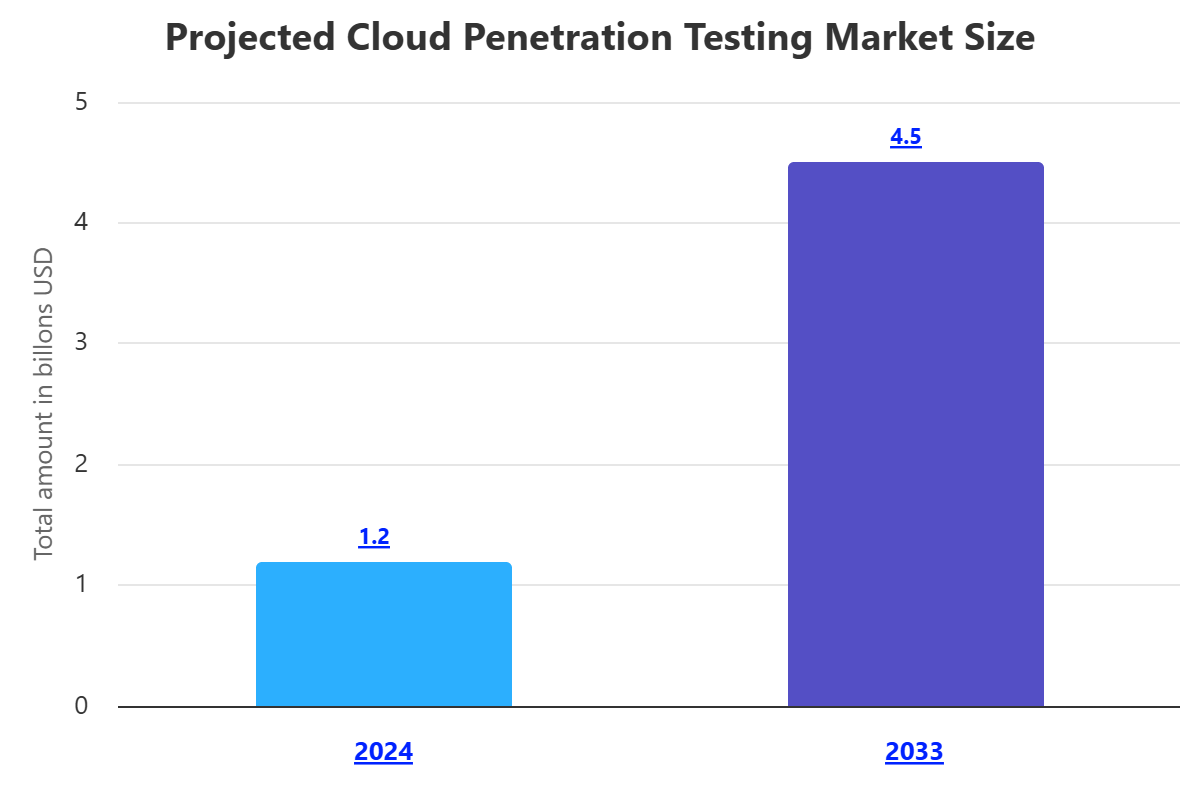
Cloud penetration testing has become a necessary security practice because more and more people are using cloud computing, which comes with its own security problems. As more important data and applications are stored in the cloud, they become attractive targets for cybercriminals. Just one setup mistake or missed vulnerability can cause big data breaches, financial losses, damage to reputation, and serious legal penalties. Without a simulated attack to find these weak spots, organizations are basically in the dark about their cloud security.
Also, following the rules is a big reason to do cloud penetration testing. Industry standards and laws like GDPR, HIPAA, PCI DSS, ISO 27001, and other national cybersecurity laws require regular security checks, including penetration testing, for systems that handle sensitive data. Cloud setups usually process and store this kind of data. So, showing that you're doing your best through thorough cloud penetration testing is important for meeting the rules, avoiding large fines, and gaining trust from customers, partners, and auditors.
Cloud penetration testing helps check if the cloud security measures in place are working and improve an organization's overall resilience. It gives insights into how well security teams can spot, handle, and reduce attacks. By finding and fixing vulnerabilities early, organizations can improve their security plans, strengthen their defenses, and build a stronger security culture. This leads to a more solid and adaptable cloud setup that can handle changing cyber threats.
How Does Cloud Penetration Testing Work?
Cloud penetration testing usually follows a set process, starting with careful planning. This first step is very important, especially in cloud setups, because of who is responsible for what and possible restrictions from CSPs. The penetration testing team works with the client to clearly define what will be tested. They also identify the specific cloud services, applications, and infrastructure parts to be tested, setting clear goals. This involves knowing the target environment (like AWS, Azure, GCP), the specific accounts or subscriptions, and any compliance needs. Often, you need permission from the CSP, and the rules must be followed closely to avoid affecting other users or breaking the rules.
After planning, the next step is to gather information and assess vulnerabilities. Testers collect as much information as they can about the target cloud, including what's publicly available, exposed services, and setup details. This often means listing cloud resources (like S3 buckets, virtual machines, serverless functions), finding open ports and services, and studying network setups. Automated tools are often used to scan for known vulnerabilities, setup mistakes, and common security problems, such as IAM policies that are too open or storage that's publicly exposed. The goal is to find possible ways in and weaknesses that could be exploited.
The last step is to exploit vulnerabilities, move around after exploiting them, and create a report. Once testers find possible vulnerabilities, they try to exploit them in a controlled way to show what could happen in reality. This might involve getting unauthorized access, increasing permissions, moving without authorization within the cloud, or taking simulated sensitive data. Activities after exploiting vulnerabilities aim to see how far the damage could go. When done, a full report is created, describing all the vulnerabilities found, how serious they are, what steps were taken to exploit them, and clear advice on how to fix them. This report is important for helping the client make their cloud security stronger.
Types of Cloud Penetration Testing
Cloud penetration testing includes different types, each designed to simulate different attack scenarios and give specific details about an organization's cloud security. One common type is Infrastructure as a Service (IaaS) Penetration Testing. This focuses on checking the security of the basic cloud infrastructure parts that the customer manages, like virtual machines (EC2 instances, Azure VMs), virtual networks, storage buckets (S3, Blob Storage), and custom setups. Testers will look for setup mistakes in network security groups, insecure SSH/RDP access, exposed databases, and vulnerabilities in the operating systems and applications on the virtualized infrastructure.
Another important type is Platform as a Service (PaaS) Penetration Testing. In PaaS setups, the cloud company manages the basic infrastructure and operating system, while the customer focuses on putting their applications to use and managing them. PaaS penetration testing focuses on vulnerabilities in the application area, the platform setups, and how the application interacts with the PaaS services. This includes checking the security of serverless functions (Lambda, Azure Functions), container services (Kubernetes, ECS), managed databases, and the APIs used to access and manage these services.
Software as a Service (SaaS) Penetration Testing is another type. In SaaS, the cloud company manages the whole application. Customers usually don't have many setup options. SaaS penetration testing focuses on checking the security of how the customer interacts with the SaaS application, including authentication methods, authorization controls, data separation, and possible data leaks through insecure API use or misconfigured user roles. Because the SaaS company has a high level of control, doing a full penetration test on the basic SaaS infrastructure is usually restricted and needs direct agreement with the SaaS seller.
Components of Cloud Penetration Testing
Good cloud penetration testing checks different key areas in the cloud setup to find many different vulnerabilities. One important area is checking Identity and Access Management (IAM). This includes carefully checking how users, roles, and services are authenticated and allowed to access cloud resources. Testers will check IAM policies for access that's too open, ways to increase permissions, weak multi-factor authentication (MFA), insecure access keys, and whether the rule of least privilege is followed. Because IAM controls access to cloud resources, setup mistakes here are a common and critical source of vulnerabilities.
Another key area is reviewing network security and setup. This includes checking virtual private clouds (VPCs), subnets, security groups, network access control lists (ACLs), and firewall rules. Testers look for insecure network separation, services that are publicly exposed when they should be internal, open ports, and routing setup mistakes that could allow unauthorized access to important internal resources. In the cloud, regular network security rules apply, but how they are put in place is different, requiring special knowledge to find problems in cloud-based networking.
How data is stored and application security are also important parts of cloud penetration testing. This means checking the security of cloud storage services like S3 buckets, Azure Blob Storage, and Google Cloud Storage for public exposure, incorrect access controls, and encryption weaknesses. For applications in the cloud, regular application security testing methods are used but with a cloud focus, looking for vulnerabilities in serverless functions, containerized applications, APIs, and microservices. This approach makes sure that both the data stored and the applications that process it are secure.
Benefits of Cloud Penetration Testing
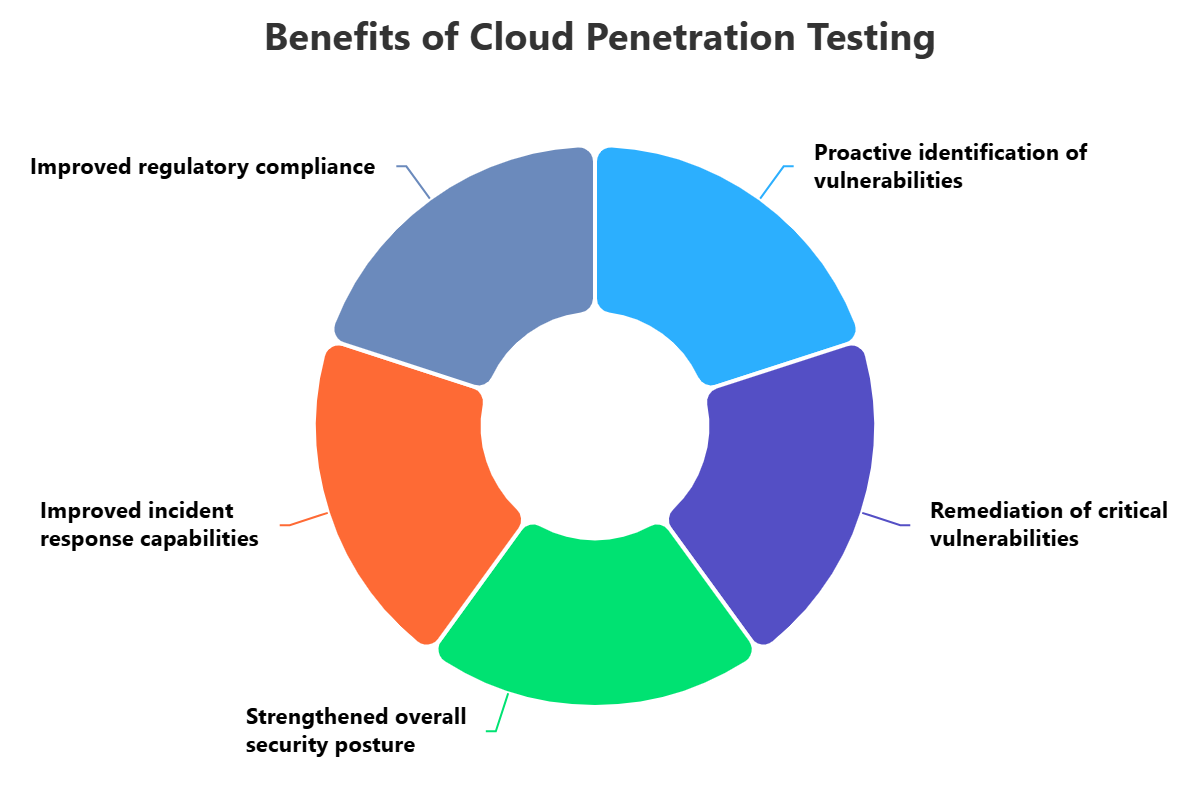
Doing regular cloud penetration testing has big benefits for organizations working in cloud setups. First is finding and fixing important vulnerabilities early. By copying real attacks, cloud penetration testing finds security problems—including setup mistakes, access controls that are too open, and logic errors—that automated scanning tools might miss. This lets organizations fix weaknesses before attackers find and use them, greatly lowering the risk of data breaches, service disruptions, and financial losses.
Another benefit is meeting legal needs and industry standards. Many data privacy laws (like GDPR, HIPAA, CCPA) and security methods (like PCI DSS, ISO 27001) require regular security checks for systems that handle sensitive data. Cloud setups often fall under these needs. Cloud penetration testing shows that an organization is dedicated to strong security, helping to meet legal needs, avoid penalties, and show responsibility to auditors and stakeholders. It shows a proactive way to handle security in the cloud.
Cloud penetration testing helps strengthen overall security and improve how you respond to incidents. What you learn from a penetration test goes beyond just finding individual vulnerabilities. It gives a full view of how strong the cloud setup is, showing weaknesses in how attacks are detected, how people respond, and how aware people are of security. This feedback lets organizations improve their cloud security plans, strengthen their defenses, and get their teams ready to detect, contain, and recover from actual cyber incidents, which helps them have a stronger security program.
Challenges of Cloud Penetration Testing
Even though it's important, cloud penetration testing has its own challenges that make it different from regular assessments. One of the biggest problems is dealing with who is responsible for what, as defined by cloud service companies (CSPs). Testers must follow CSP rules closely, which often limit testing of some basic infrastructure parts (like core networking, hypervisors) to not affect other users or break the CSP's rules. Knowing what can and can't be tested and getting permission is a hard but important first step that can change a lot between companies like AWS, Azure, and GCP.
Another big challenge comes from how changeable cloud resources are. Cloud setups are very flexible, with instances, containers, and serverless functions being created and removed often, and network setups changing fast because of automation. This constant change makes it hard to test a consistent area of attack. Regular manual testing that takes a lot of time might not work, so you need methods and tools that can keep up with the changing cloud, often needing to connect right into CI/CD pipelines.
The complexity of cloud services and possible setup mistakes add another problem. Each CSP offers many special services (like S3, Lambda, Kubernetes, Azure AD, Cloud Functions), each with its own security risks and setup details. Setup mistakes in IAM policies, storage bucket permissions, network security groups, or serverless function code are common and can be hard for automated tools to find fully. Finding small logic flaws and chained vulnerabilities across multiple cloud services often needs deep cloud security knowledge and a very flexible testing approach.
Best Practices for Cloud Penetration Testing
To do good cloud penetration testing and get the most out of it, organizations should follow some key practices. First, clearly define what will be tested and get permission from your Cloud Service Provider (CSP). Before testing, carefully identify the cloud accounts, regions, services, and specific resources that will be tested. Because of who is responsible for what, it's important to know what you're allowed to test. Always get written permission from your CSP (like by following AWS, Azure, or GCP's official penetration testing rules) to avoid breaking their rules, which could lead to service problems or account suspension. A clear definition keeps you from causing problems and makes sure the assessment is focused.
Second, focus on Identity and Access Management (IAM) and setup review. Many cloud breaches come from IAM policies that are set up wrong, roles that are too open, or insecure access keys. Spend a lot of time carefully checking IAM policies, role assignments, and user permissions to make sure the rule of least privilege is followed. Also, fully check cloud service setups, including network security groups, storage bucket settings (like S3 public access), serverless function permissions, and database setups. Automated cloud security tools can help, but manual checks are often needed to catch complex logic flaws.
Add cloud penetration testing to your Secure Software Development Lifecycle (SSDLC) and test often. Security should be part of the plan from the start. By adding cloud penetration testing early and regularly throughout development and deployment, organizations can find and fix vulnerabilities better. Use automation for routine checks, but also do periodic manual penetration tests by cloud security experts. This ongoing approach makes sure your cloud setup stays strong against changing threats and keeps a strong security level over time.
How ImmuniWeb Can Help with Cloud Penetration Testing?
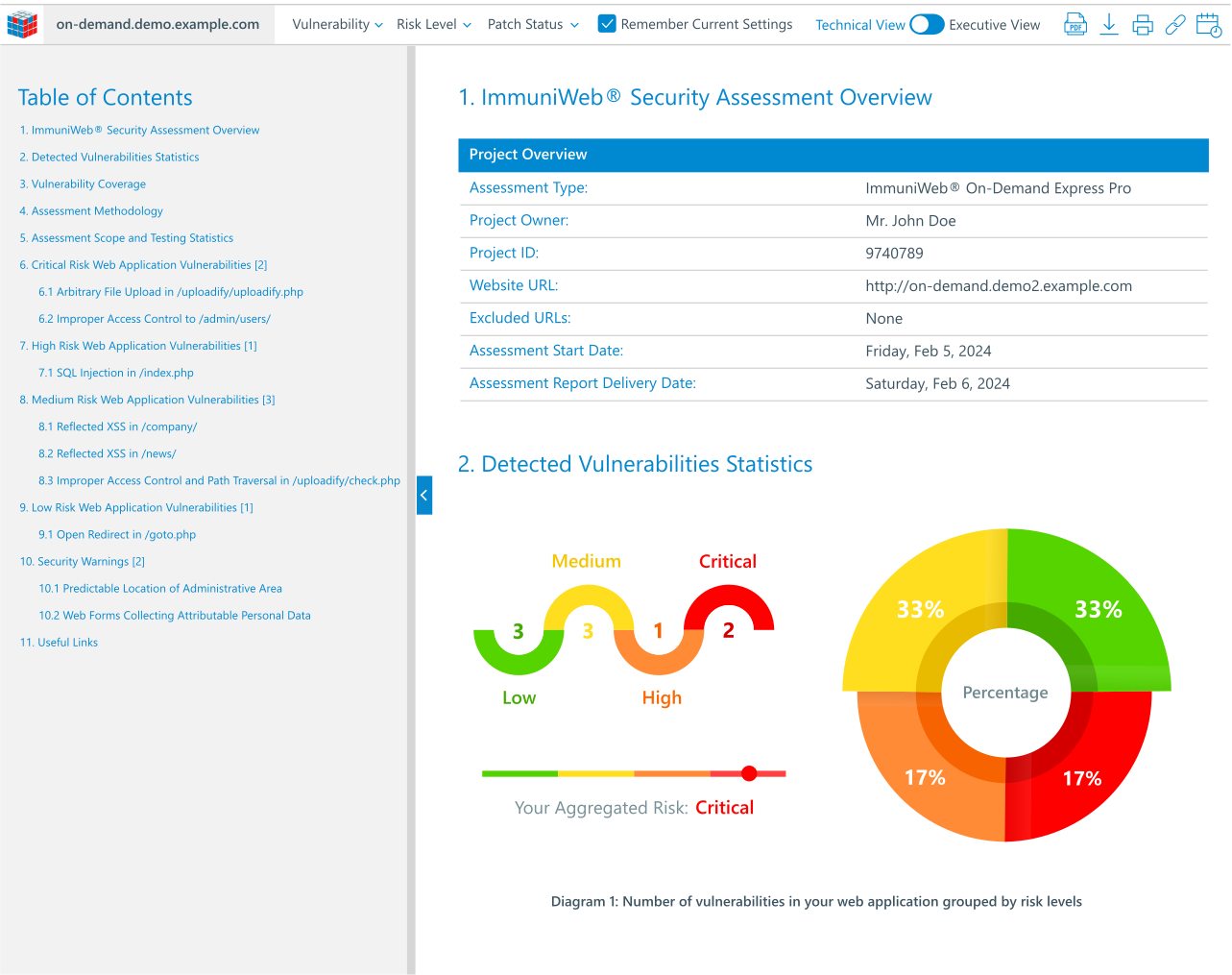
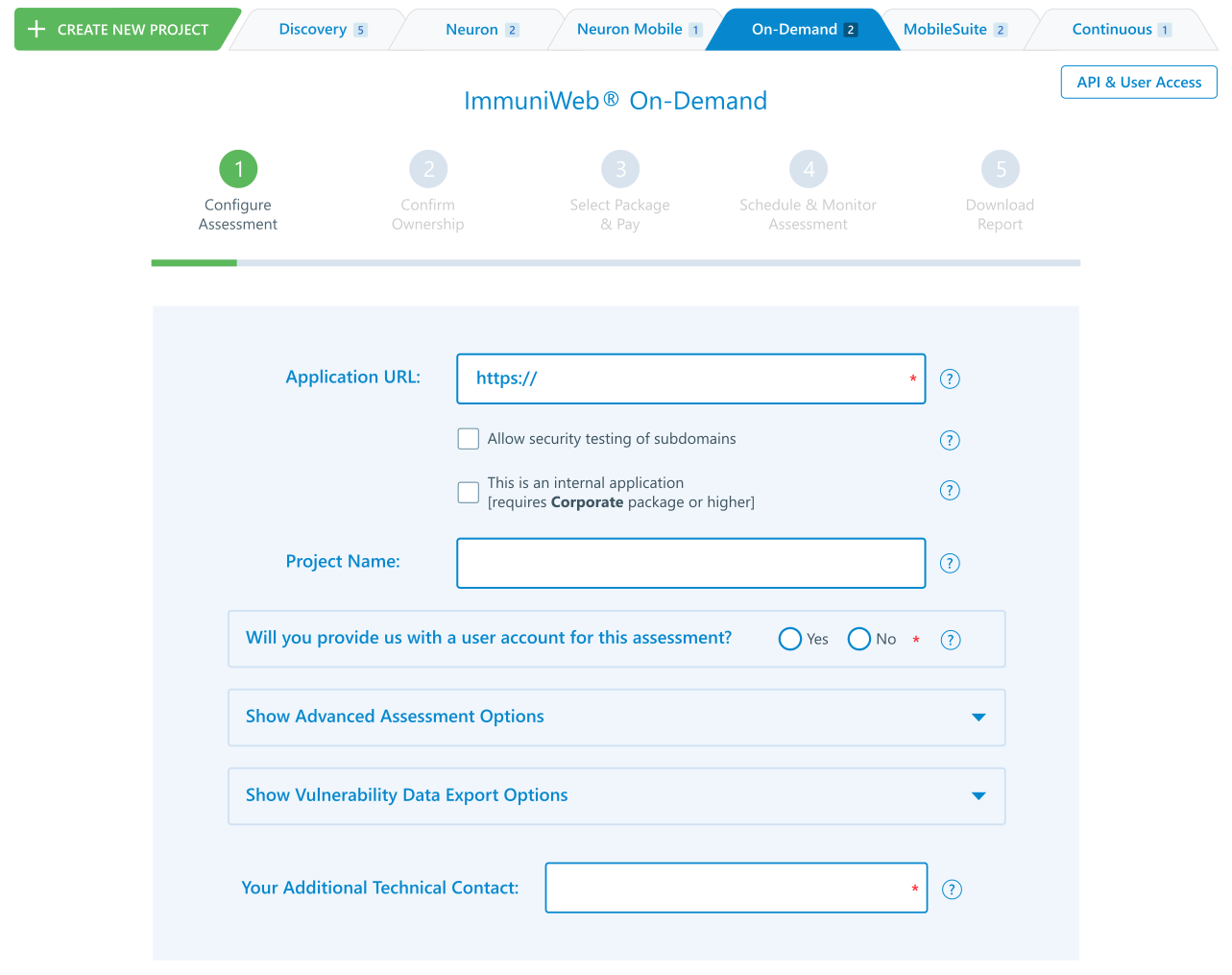
Test your web applications, cloud-native apps or APIs hosted in AWS, Azure, GCP or other cloud service providers (CSP) with ImmuniWeb® On-Demand cloud penetration testing. Customize your cloud penetration testing scope and requirements, schedule the penetration testing date and get your cloud penetration test report. The cloud penetration testing is accessible around the clock 365 days a year.
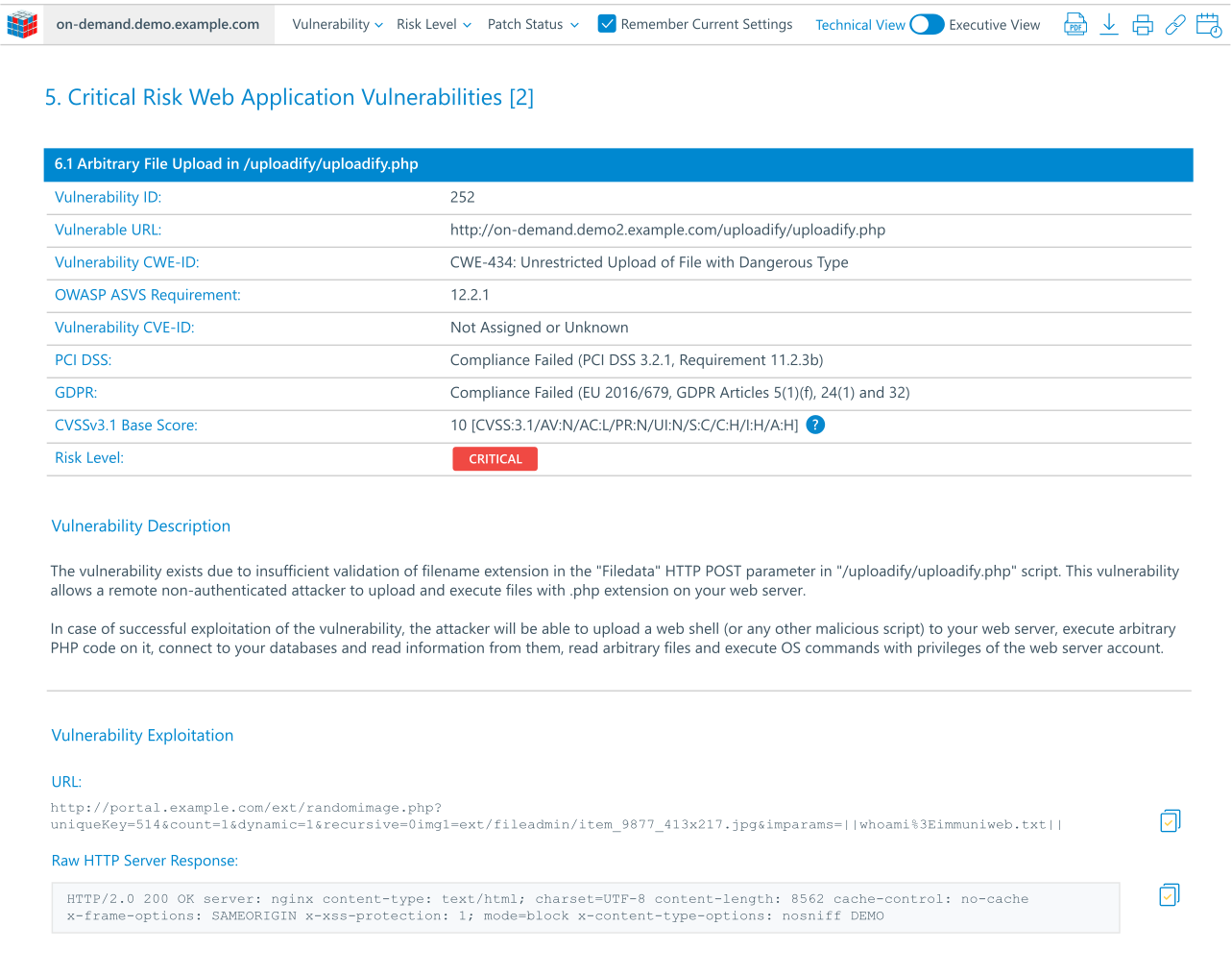
Our cloud penetration testing is provided with a contractual zero false positives SLA. If there is false positive in your penetration testing report, you get the money back. Detect OWASP Top 10 and SANS Top 25 vulnerabilities, as well as OWASP API Top 10 weaknesses, CSP-specific security issues and misconfigurations. Uncover what can be done with cloud IMDS pivoting and privilege escalation attacks by exploiting excessive access permissions or default IAM policies in your cloud environment.
Every cloud penetration test is provided with unlimited patch verification assessments so your cloud engineers can fix the security flaws and then validate, at no additional cost, that everything has been properly remediated. Download your cloud penetration test report from the interactive and user-friendly dashboard into a PDF file or just export the data directly into your SIEM via our DevSecOps and CI/CD integrations. Enjoy 24/7 access to our security analysts may you need any assistance during the cloud penetration test.
Disclaimer
The above-mentioned text does not constitute legal or investment advice and is provided “as is” without any warranty of any kind. We recommend talking to ImmuniWeb experts to get a better understanding of the subject matter.


















 API Penetration
 API Security
 Application Penetration
 Application Security
 Attack Surface
 Automated Penetration
 Cloud Penetration
 Cloud Security
 Continuous Automated
 Continuous Breach and
 Continuous Penetration
 Continuous Threat
 Cyber Threat
 Data Security Posture
 Dark Web
 Mobile Penetration
 Mobile Security
 Network Security
 Penetration
 Phishing Websites
 Third-Party Risk
 Threat-Led
 Web Penetration
 Web Security